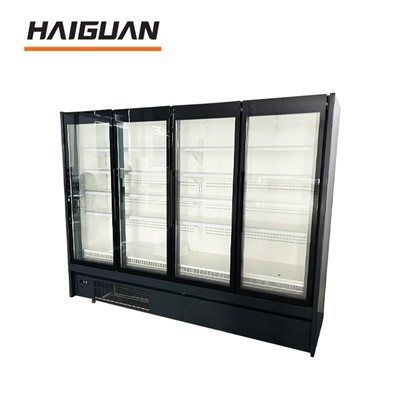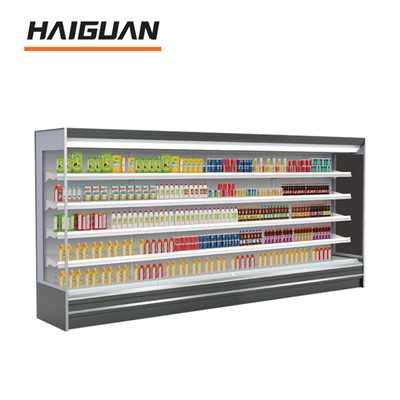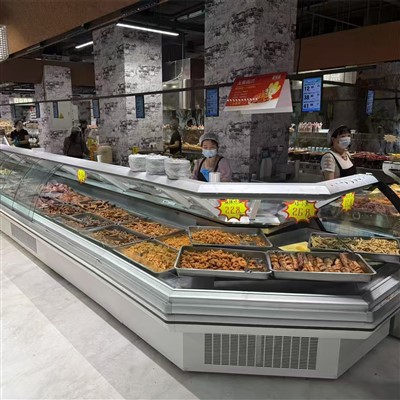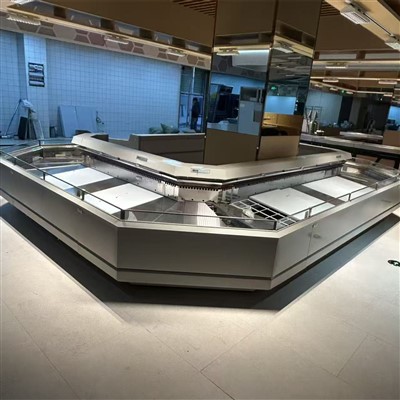

Air curtain display coolers are essential equipment in modern supermarkets and food retail stores, playing a crucial role in maintaining the freshness and quality of perishable products. The air distribution pattern within these coolers is a key factor that directly impacts their cooling efficiency, energy consumption, and the preservation of stored items. As a supplier of air curtain display coolers, understanding the air distribution pattern is fundamental to providing high - quality products that meet the needs of our customers.


The Basics of Air Distribution in Air Curtain Display Coolers
The air distribution pattern in an air curtain display cooler refers to the way air is circulated and distributed within the cooler. The primary purpose of this air circulation is to create a stable and low - temperature environment inside the cooler while preventing the infiltration of warm air from the outside.
The air curtain itself is a stream of air that acts as a barrier between the cold interior of the cooler and the warm ambient environment. It is typically generated by a fan system located at the top or side of the cooler. The air is drawn from the interior of the cooler, cooled by the refrigeration system, and then blown out in a continuous stream to form the air curtain.
Types of Air Distribution Patterns
There are several common air distribution patterns in air curtain display coolers, each with its own characteristics and advantages.
Downward Airflow Pattern
The most common type is the downward airflow pattern. In this pattern, the cooled air is blown downwards from the top of the cooler, creating a vertical air curtain. This type of airflow is effective in preventing warm air from entering the cooler from the top. The downward - flowing air creates a stable temperature gradient within the cooler, with the coldest air at the bottom and slightly warmer air at the top. This is beneficial for storing products that require different temperature ranges, as heavier cold air naturally settles at the bottom.
Horizontal Airflow Pattern
Some air curtain display coolers use a horizontal airflow pattern. In this case, the air is blown horizontally across the opening of the cooler. This pattern is particularly useful for open - front coolers where the main concern is to prevent warm air from entering the cooler from the front. The horizontal air curtain can effectively block the warm air, maintaining a relatively stable temperature inside the cooler.
Mixed Airflow Pattern
A mixed airflow pattern combines both downward and horizontal airflows. This pattern is designed to take advantage of the benefits of both types of airflow. For example, a downward airflow can be used to cool the interior of the cooler, while a horizontal airflow can be used to prevent warm air from entering from the front. This combination can provide better temperature control and energy efficiency.
Factors Affecting Air Distribution Pattern
Several factors can affect the air distribution pattern in an air curtain display cooler.
Fan Design and Placement
The design and placement of the fans play a crucial role in determining the air distribution pattern. The size, shape, and number of fans can affect the volume and velocity of the air being circulated. For example, larger fans can move more air, but they may also consume more energy. The placement of the fans can also affect the direction and uniformity of the airflow. If the fans are not properly placed, it can result in uneven air distribution, leading to temperature variations within the cooler.
Cooler Geometry
The geometry of the cooler, including its height, width, and depth, can also affect the air distribution pattern. A taller cooler may require a stronger downward airflow to ensure that the cold air reaches the bottom. A wider cooler may need a more powerful horizontal airflow to prevent warm air from entering from the sides. The shape of the cooler opening can also impact the air curtain's effectiveness. A narrow opening may require a higher - velocity air curtain to maintain a good seal.
Ambient Conditions
The ambient conditions, such as temperature, humidity, and air movement, can have a significant impact on the air distribution pattern. In a hot and humid environment, the air curtain needs to work harder to prevent warm and moist air from entering the cooler. Strong air movement in the surrounding area can also disrupt the air curtain, making it less effective.
Importance of Optimal Air Distribution Pattern
An optimal air distribution pattern is crucial for the performance of air curtain display coolers.
Temperature Control
A well - designed air distribution pattern ensures that the temperature inside the cooler is evenly distributed. This is essential for maintaining the quality and freshness of the stored products. Uneven temperature distribution can lead to spoilage of products, especially those that are sensitive to temperature changes.
Energy Efficiency
An efficient air distribution pattern can reduce energy consumption. By preventing warm air from entering the cooler, the refrigeration system does not have to work as hard to maintain the desired temperature. This can result in significant energy savings over time.
Product Preservation
Proper air distribution helps to preserve the quality of the products stored in the cooler. It can prevent the growth of bacteria and mold, which can cause spoilage. Additionally, it can help to maintain the moisture content of the products, preventing them from drying out.
Our Products and Air Distribution
As a supplier of Air Curtain Cooler, we pay great attention to the air distribution pattern in our products. Our engineers use advanced simulation and testing techniques to optimize the air distribution in our coolers.
We offer a variety of air curtain display coolers with different air distribution patterns to meet the diverse needs of our customers. Whether it is a downward airflow pattern for a tall cooler or a horizontal airflow pattern for an open - front cooler, we can provide the right solution.
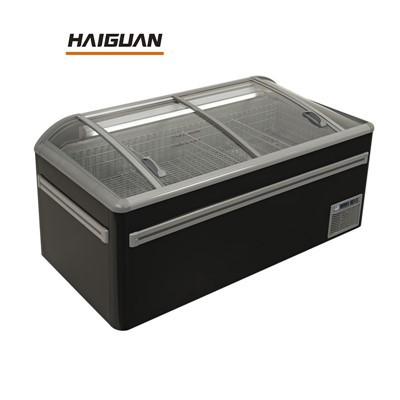
In addition to air curtain display coolers, we also offer other related products such as Low Temperature Cold Storage Warehouse and Glass Top Island Freezer. These products are designed with the same attention to air distribution and energy efficiency.
Contact Us for Procurement
If you are in the market for air curtain display coolers or other related refrigeration products, we invite you to contact us for procurement. Our team of experts can provide you with detailed information about our products, including their air distribution patterns, energy efficiency, and performance. We can also offer customized solutions based on your specific requirements.
References
- ASHRAE Handbook - Refrigeration. American Society of Heating, Refrigerating and Air - Conditioning Engineers.
- "Airflow and Temperature Distribution in Open - Front Refrigerated Display Cabinets" by various researchers in the field of refrigeration engineering.
- Industry reports on supermarket refrigeration equipment and air distribution technology.