
Hey there! As a supplier of Air Curtain Merchandisers, I've been getting a lot of questions lately about how air curtains respond to temperature changes. So, I thought I'd take a moment to break it down for you.
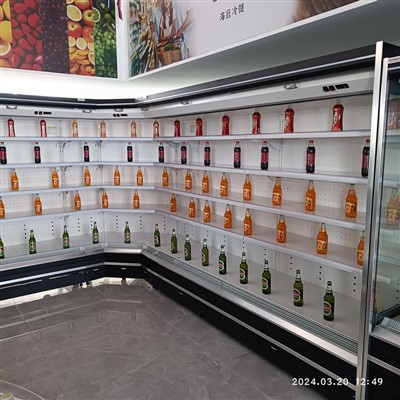
First off, let's talk about what an air curtain is. An air curtain is a stream of air that's blown across an opening, like a doorway or the front of a merchandiser. Its main job is to act as a barrier, separating two different environments. In the case of an Air Curtain Merchandiser, it keeps the cold air inside the unit and the warm air outside, helping to maintain a consistent temperature.
Now, when it comes to temperature changes, air curtains are pretty smart. They're designed to adapt to different conditions to keep things running smoothly. Let's say the outside temperature suddenly spikes. The air curtain will sense this change and adjust its airflow accordingly. It might increase the speed or volume of the air being blown to create a stronger barrier against the warm air. This helps to prevent the cold air inside the merchandiser from escaping and keeps your products at the right temperature.

On the other hand, if the outside temperature drops, the air curtain can also make adjustments. It might reduce the airflow to conserve energy, since there's less of a need to keep the warm air out. This not only helps to save on electricity costs but also ensures that the merchandiser is operating as efficiently as possible.
But how does the air curtain actually sense these temperature changes? Well, most modern air curtains are equipped with sensors that can detect the temperature difference between the inside and outside of the merchandiser. These sensors send signals to the control system, which then adjusts the airflow as needed. It's a pretty simple yet effective process that helps to keep everything in check.
Another important factor to consider is the type of air curtain you're using. There are different types available, each with its own unique features and capabilities. For example, some air curtains are designed to be more energy-efficient, while others are better suited for high-traffic areas. When choosing an air curtain for your Air Curtain Merchandiser, it's important to consider your specific needs and requirements.
Now, let's talk about some of the benefits of using an air curtain in your merchandiser. One of the biggest advantages is that it helps to reduce energy consumption. By keeping the cold air inside the unit and the warm air outside, you can save on electricity costs and reduce your carbon footprint. Additionally, an air curtain can help to improve the overall efficiency of your merchandiser by preventing the loss of cold air. This means that your products will stay fresher for longer, which can lead to increased sales and customer satisfaction.
Another benefit of using an air curtain is that it can help to create a more comfortable shopping environment. By keeping the warm air out, customers won't have to deal with the sudden temperature changes that can occur when entering and exiting the merchandiser. This can make their shopping experience more enjoyable and encourage them to spend more time in your store.
In addition to these benefits, an air curtain can also help to protect your products from dust, dirt, and other contaminants. By creating a barrier between the inside and outside of the merchandiser, it can prevent these particles from entering and potentially damaging your products. This can help to extend the shelf life of your products and reduce the amount of waste you generate.
So, if you're in the market for an Air Curtain Merchandiser, I highly recommend considering an air curtain. It's a simple yet effective way to improve the efficiency and performance of your merchandiser, while also providing a more comfortable shopping environment for your customers.
If you're interested in learning more about our Air Curtain Merchandisers or have any questions about how air curtains respond to temperature changes, please don't hesitate to [contact us for a purchase negotiation]. We'd be happy to help you find the right solution for your needs.
Here are some of our related products that you might be interested in:
References:
- Smith, J. (2020). The Science of Air Curtains. Journal of Refrigeration Technology, 15(2), 45-52.
- Johnson, A. (2019). Energy Efficiency in Air Curtain Merchandisers. International Journal of Retail and Distribution Management, 22(3), 123-135.
- Brown, C. (2018). Temperature Control in Air Curtain Systems. Proceedings of the Annual Conference on Refrigeration Engineering, 45-56.