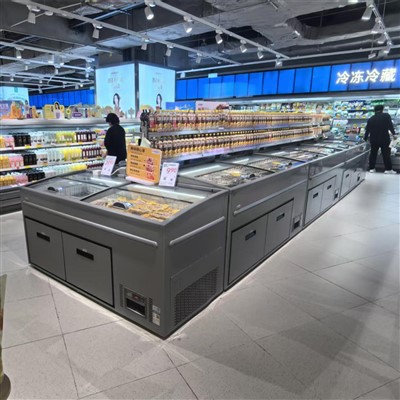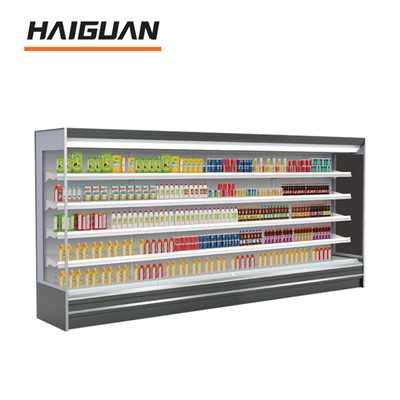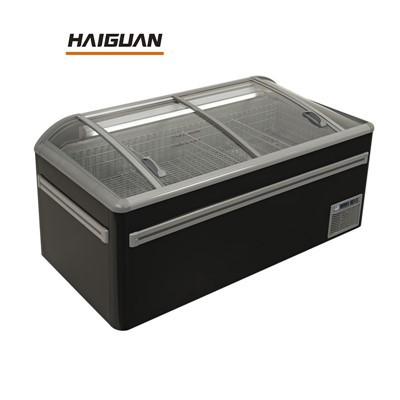
In refrigerated display cabinet refrigeration systems, frost formation on the evaporator surface is a common phenomenon. Frost formation increases thermal resistance and air flow resistance, thus affecting heat transfer on the evaporator surface and the temperature distribution inside the cabinet. Especially in low-temperature and high-humidity environments, evaporator frosting directly affects the safety and stable operation of the evaporator and the entire system. Therefore, domestic and international scholars have conducted extensive research on evaporator frosting and defrosting technologies.
1. Evaporator Frosting
Evaporator frosting increases the thermal resistance of its surface heat transfer, reduces the overall heat transfer coefficient, and leads to problems such as reduced air velocity at the air curtain outlet, increased food temperature inside the cabinet, and increased energy consumption of the display cabinet. Therefore, studying the mechanism of evaporator frosting and exploring effective methods to suppress defrosting has always been a focus of attention for scholars at home and abroad. Mao et al. found through experimental studies that indirect refrigeration systems using potassium salt as a refrigerant have more uniform and concentrated frosting on the heat exchanger compared to R404A refrigerant systems, which significantly shortens the defrosting time and reduces the defrosting cooling load of the display cabinet. Researchers have proposed adding a dehumidifying pre-cooler before the evaporator. Experimental results show that this method improves the sealing capacity of the air curtain, extends the defrosting time, and plays an important role in ensuring the quality and safety of food. Yuan Pei used four parallel evaporator modules to replace the integral evaporator. During defrosting, the modular evaporators defrost sequentially, ensuring that some evaporators are still refrigerating during defrosting, thus effectively reducing the fluctuation of food temperature during defrosting.
2. Evaporator Defrosting Technology
Refrigerated display cabinets have various defrosting methods. A reasonable defrosting method should result in minimal temperature rise inside the cabinet during defrosting and minimal impact on food quality and the environment. Different defrosting methods have their own advantages and disadvantages. Faramarzi pointed out that in the electric heating defrosting process, only 15% of the heat is used for defrosting the evaporator surface, and the remaining heat is dissipated into the interior of the display cabinet, thus increasing the heat load of the display cabinet. Although domestic and international scholars have conducted extensive research on evaporator frosting and defrosting problems, and significant progress has been made in reducing evaporator frost accumulation, extending defrosting cycles, and improving defrosting techniques, much of this research is still limited to studying only one aspect of the problem. In reality, as the amount of frost on the evaporator surface increases, the thermal resistance of the heat exchange surface increases, leading to a decrease in the air velocity at the air curtain outlet, thus affecting the stable operation of the refrigeration system. Therefore, comprehensive research that considers the food display cabinet evaporator, air curtain, refrigeration system, and supermarket environment as an integrated system is needed.