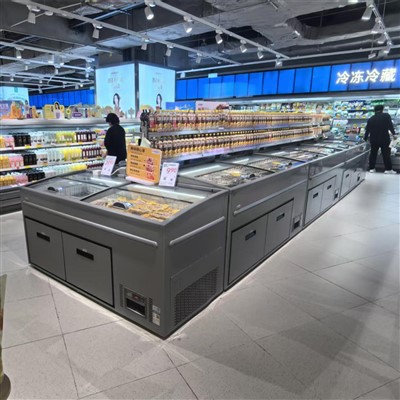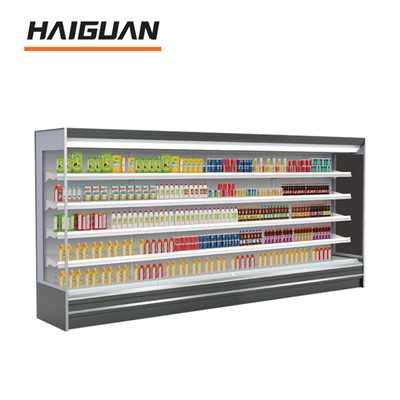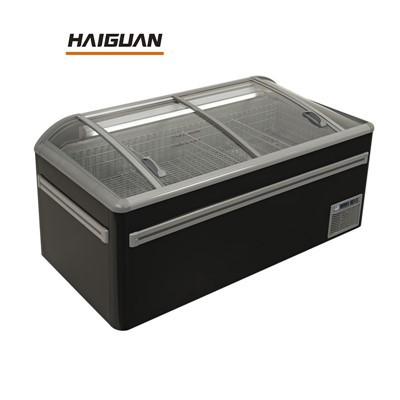
In the context of increasingly depleted energy resources, energy conservation and sustainable development have become the dominant themes of our time. Statistics show that the energy consumption of supermarket food refrigeration display cabinets accounts for approximately 50% of the total energy consumption of supermarkets. Therefore, finding effective methods to reduce the energy consumption of refrigeration display cabinets and studying the factors affecting the power consumption of their refrigeration systems is particularly important. Currently, researchers are mainly focusing on multi-stage parallel technology and natural cooling sources.
1. Multi-machine Parallel Technology
Currently, to reduce the energy consumption of large supermarket refrigeration systems and improve their operating efficiency, scholars have proposed combining traditional single-unit refrigeration systems into parallel compressor units. Regarding the selection of units, the concept of multi-stage parallel connection has been proposed, suggesting that the optimal combination of parallel units should be based on matching the refrigeration capacity of the display cabinets with the refrigeration load, selecting an appropriate number of compressors with different power ratings to reduce the supermarket's energy consumption.
The energy-saving mechanism of multi-machine parallel compression was explained. Theoretical analysis and experimental comparison were conducted using four parallel compressor units driving 12 display cabinets and a single unit driving 3 display cabinets. The results showed that using the parallel unit method reduced annual cooling energy consumption by 15% to 20%, and the energy regulation gradient could be less than 25%, achieving the expected goal.
2. Natural Cooling Sources
Regarding the high energy consumption of food refrigeration display cabinets, researchers have proposed using the low-temperature ambient air in cold winters as a cooling source. Experimental tests showed that this method can save approximately 44% of energy. Although ambient air supply display cabinets can save a significant amount of electricity, their application is limited by ambient temperature. Based on this, Yu Kezhi et al. proposed a new air supply mode-combined air supply. This method cools the ambient air through an evaporator before supplying it to the display cabinet at the required air curtain outlet temperature. This new combined air supply method significantly improves the energy efficiency of the display cabinet while overcoming the drawbacks of the ambient air supply method.
3. Other Energy-Saving Measures
Coupled energy saving is the result of comprehensively considering the interaction of various factors, such as the influence of the display cabinet's own structure type, personnel flow interference, and lighting intensity on the energy consumption performance of supermarket display cabinets. Experimental studies on the energy consumption of supermarket display cases and air conditioning systems under varying environmental temperature and humidity conditions showed that the overall energy consumption of the refrigerated display cases and the air conditioning system was lowest when operating at an ambient temperature of 23℃ and a relative humidity of 55%.