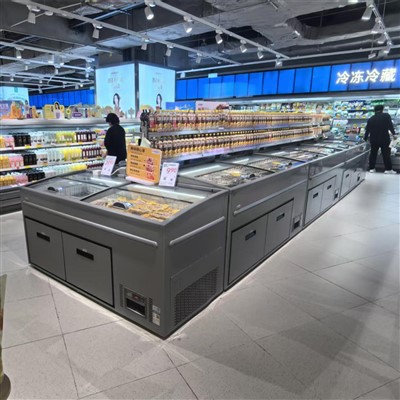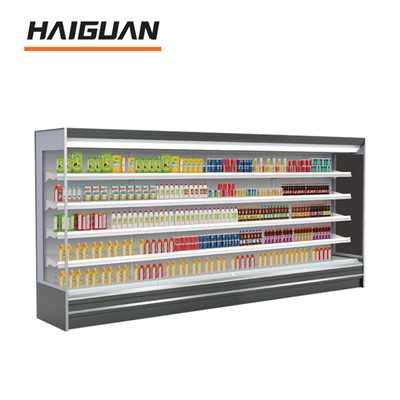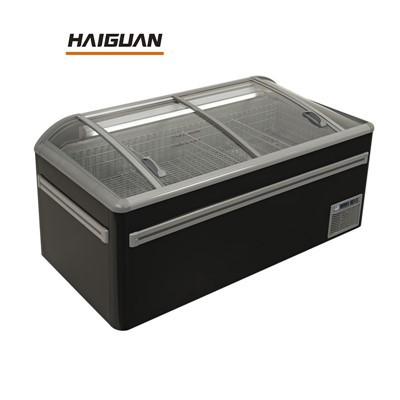
Refrigerated display cabinets are the terminal equipment in the food cold chain, providing functions such as refrigerated storage, display, and enhancing the shopping environment. They are mainly used in supermarkets, convenience stores, and other locations, and account for approximately 50% of a supermarket's total energy consumption. They can be classified into island type, wall type, and those with integrated condensing units.
With the rapid development of the social economy and the continuous improvement of people's living standards, convenient, safe, hygienic, and nutritious frozen and refrigerated foods are becoming increasingly popular, leading to rapid development in their production and sales. To ensure that frozen and refrigerated foods are supplied to consumers in good quality, a complete food cold chain process must be established, covering every link from production, storage, transportation, and sales to the consumer.
Many factors affect the food quality and energy consumption of refrigerated display cabinets, such as external ambient temperature and humidity, lighting, air curtain structure, refrigeration system, back panel structure, shelf performance, and cabinet insulation performance. These factors have a significant impact on system energy consumption, the uniformity of food temperature distribution inside the cabinet, and the temperature rise of food during defrosting.
In recent years, domestic and international scholars have conducted extensive research on the air curtain performance, temperature and humidity effects, frosting and defrosting characteristics, structural optimization, refrigeration systems, and the application of phase change thermal storage materials in refrigerated display cabinets. This research is of great significance in promoting the development of refrigerated display cabinets, improving food quality, and reducing energy consumption.