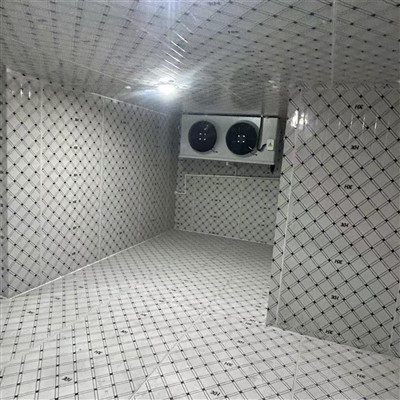
Use ABS pipes, as UPVC becomes brittle at low temperatures. Sampling tubes should be kept at least 300mm away from walls or ceilings to prevent frost formation on the pipes.
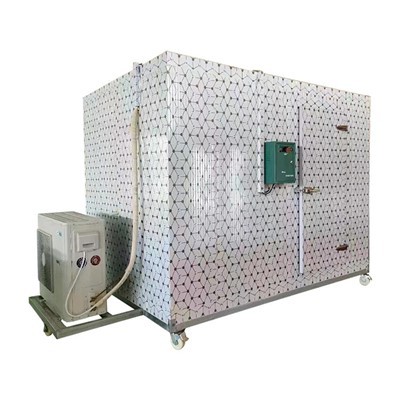
Side openings should be used, as condensation easily forms on the lower edge of the pipes. Side openings prevent condensation from freezing and blocking the sampling holes. The detection unit should be installed outside the cold storage, and the exhaust should be connected back into the cold storage. A heater must be immediately connected to the pipe where it exits the cold storage to heat the air inside the pipe, preventing the external pipe from freezing due to the cold air inside the cold storage.
Frozen pipes can experience significant surface condensation due to higher external temperatures, leading to freeze-thaw cycles and potential health and safety risks.
The sampling tube entering the heater should be kept horizontal or tilted towards the heater to prevent condensation from flowing back into the sampling tube and causing ice blockage.
When the heater or detection unit is installed outdoors, it must be protected by a suitable waterproof enclosure.
When installing sampling pipes, potential thermal expansion and contraction must be considered. In extreme cases, the cold storage temperature may be as low as -35°C during operation, while the temperature during sampling pipe installation may be normal room temperature.